

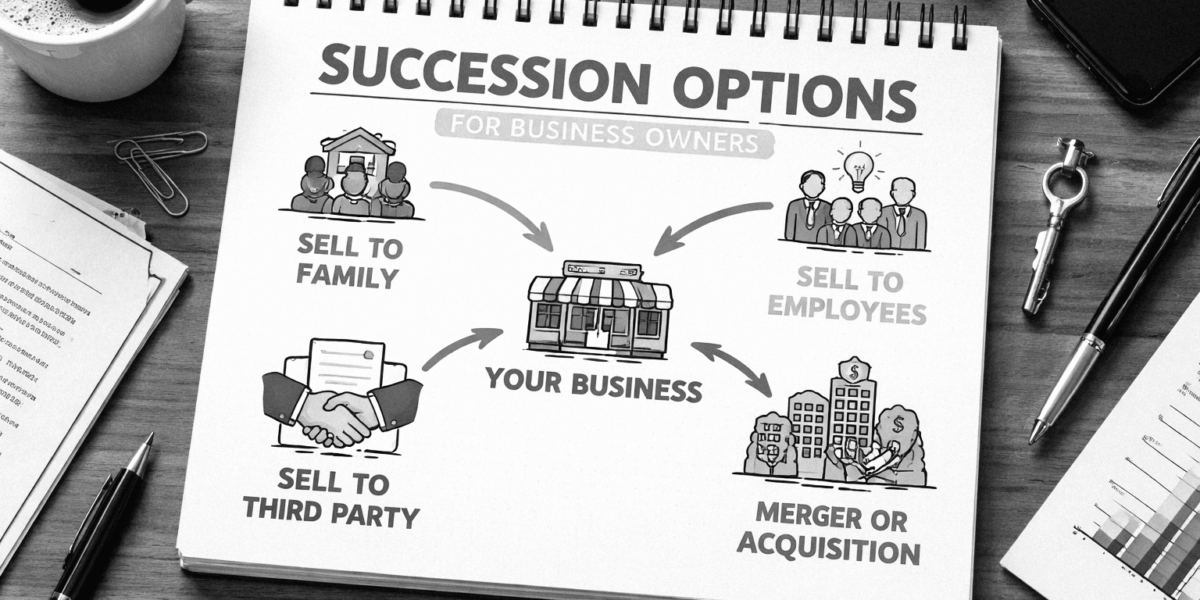
For many middle-market founders, the business is more than an asset; it is a legacy. However, by 2026, the “Silver Tsunami” of retiring Boomer and Gen X owners has created a crowded sell-side market. To stand out and secure your financial future, you must look beyond the simple “For Sale” sign and consider which succession vehicle aligns with your goals.
1. The Strategic Acquisition
Selling to a larger competitor or a vertical partner often yields the highest valuation. In 2026, strategic buyers are looking for geographic density and proprietary IP.
- Pros: Maximum liquidity; potential for your brand to scale.
- Cons: Loss of culture; likely a 2-to-3-year “earnout” period where you remain as a consultant.
2. Private Equity (The “Second Bite”)
Many business owners are opting for a Majority Recapitalization. You sell 60–80% of the business to a PE firm, take significant cash off the table, but retain a minority stake.
- The Goal: Use the PE firm’s capital to grow the business aggressively, then sell your remaining 20% in five years for a value that could rival your initial check.
3. The ESOP (Employee Stock Ownership Plan)
If preserving your company culture and rewarding your loyal team is the priority, an ESOP is a powerful, tax-advantaged tool.
- The Benefit: In the U.S., selling to an ESOP can allow the owner to defer capital gains taxes indefinitely under Section 1042, provided certain reinvestment criteria are met.
4. Internal Management Buyout (MBO)
Do you have a “Number Two” who lives and breathes the business? An MBO allows the next generation of leadership to take the reins. These are often financed through a mix of seller notes and SBA 7(a) loans.
Strategic Advice: Start your succession “pre-flight” at least 36 months before your target exit date. A clean set of audited financials and a documented SOP manual can add 0.5x to 1.0x to your EBITDA multiple.