

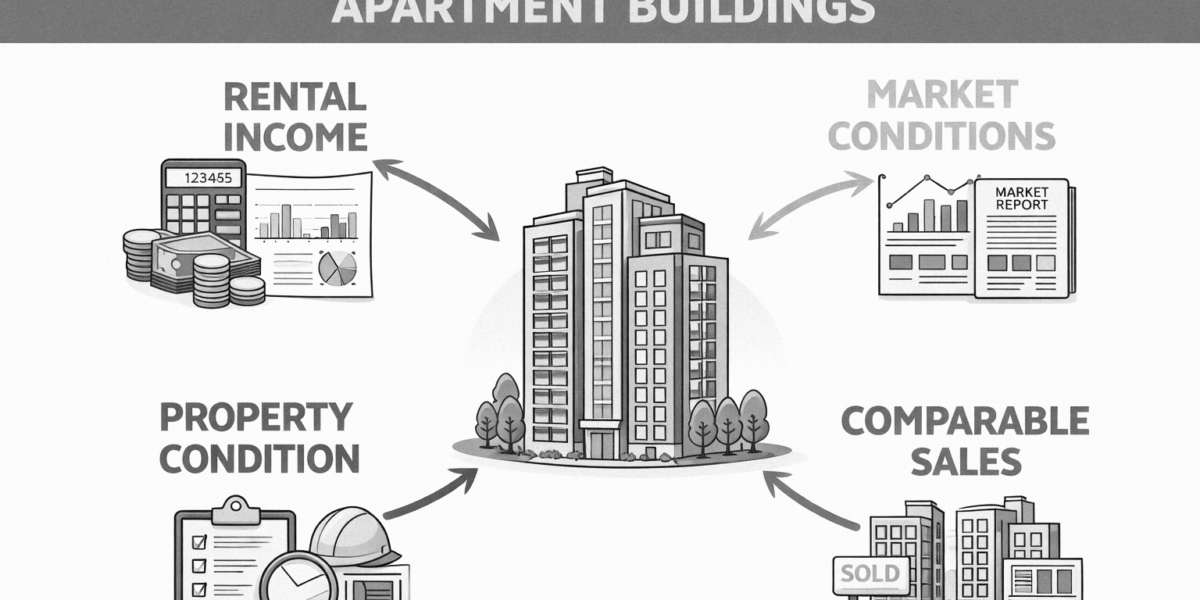
The “easy money” era of multifamily investing has transitioned into an era of operational discipline. For LMM investors looking at 20- to 100-unit plays, valuation in 2026 requires a deeper dive than a simple back-of-the-envelope Cap Rate calculation.
The Income Approach: The Gold Standard
In the current climate, the Income Capitalization Approach remains the most reliable. However, the “Inputs” are under more scrutiny than ever.
- Net Operating Income (NOI) Scrutiny: Don’t take the seller’s “pro-forma” at face value. In 2026, insurance premiums and labor costs for maintenance have outpaced general inflation. Ensure the NOI accounts for a 5-7% vacancy factor, even in high-demand markets.
- Cap Rate Sensitivity: With the 10-year Treasury yield finding a new floor, Cap Rates have expanded. A property that traded at a 4.5% cap three years ago might be a 5.8% cap today.
The “Value-Add” Reality Check
Middle-market investors often look for “Value-Add” opportunities. To determine if the “pop” in value justifies the renovation cost, use the Yield-on-Cost metric:
If your Yield-on-Cost isn’t at least 150-200 basis points higher than current market Cap Rates, the risk of the renovation likely outweighs the reward.
Emerging Metrics: The “People” Factor
2026 has introduced a shift toward utilization metrics. Is the building equipped for remote workers? High-speed fiber and dedicated co-working nooks now drive higher “Price Per Door” than traditional amenities like pools or gyms. When determining value, look at the Retention Rate. It is significantly cheaper to keep a tenant than to turn a unit, and buildings with high social cohesion are trading at a premium.